Commercial Waste in Woolwich for businesses that need straightforward collection and responsible handling

Commercial Waste Woolwich is a practical service for businesses that need their rubbish removed without disrupting the working day. It covers regular and one-off waste streams from offices, shops, hospitality venues, workshops and shared premises, with an emphasis on tidy loading, sensible segregation and lawful disposal routes. The aim is simple: keep business space usable, reduce clutter at the point of collection and make it easier to stay on top of recurring waste.
We handle commercial waste removal as a planned service rather than an afterthought. That means clear communication about what needs taking away, what should stay on site and whether the material is suitable for recycling, mixed business waste or specialist handling. If you are comparing options, the key is usually not just speed, but whether the collection is suited to the type of business waste you produce.
For a clear starting point, use the service pages to check what is covered, then request a quotation when you are ready. If you already know the main waste types involved, that helps keep the arrangement focused and relevant.
Commercial waste collection for everyday business items

Day-to-day commercial waste often includes packaging, cardboard, office consumables, mixed rubbish from staff areas and general refuse gathered during routine operations. A proper collection service gives these streams a defined route out of the premises, rather than letting them accumulate in bins, corners or storage rooms that were never intended for long-term waste holding. That is especially useful where space is limited or access has to remain clear for staff and visitors.
The service can be arranged around the kind of waste your operation produces. Some businesses mainly need recurring removal of light mixed rubbish, while others create heavier or bulkier materials that benefit from more structured loading. The main consideration is not just the volume, but how the waste is presented, whether it can be separated at source, and how the collection can be completed safely on site. If you are assessing the scope, start with the business waste removal page for a broad overview of the service style.
Useful preparation is usually straightforward: identify the areas where waste is held, keep non-waste items separate, and note any awkward access points or time restrictions. Clear instructions make collections more efficient, especially where loading has to be coordinated with staff, customers or deliveries. If your site produces mixed materials, it may also help to separate clean recyclables from general rubbish before the appointment.
Office waste, paperwork and internal clearances
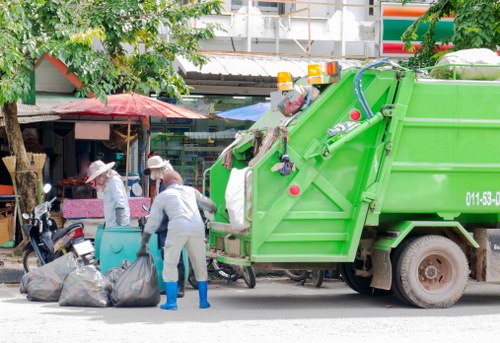
Offices generate waste that is often lighter than construction or industrial material, but still needs careful handling. Paper, packaging, obsolete stationery, broken furniture and equipment from desk moves can build up quickly, particularly when teams are reorganising or replacing items in stages. A dedicated office collection keeps those items moving out of the workspace without forcing staff to manage disposal themselves.
If your premises include storage rooms, archive areas or shared workspaces, the waste service can be planned around those zones as well. Items may need sorting before removal, especially where there are confidential documents, damaged furnishings or mixed loads containing reusable and non-reusable parts. For document-led disposal, the confidential shredding page is a sensible place to look when sensitive paperwork needs a more controlled route.
Office clearances also tend to benefit from a sensible sequence. Remove obvious rubbish first, then deal with reusable or surplus items, and finally clear any awkward items that need extra attention. If you are planning a larger internal tidy, the office clearance page gives a more focused view of that service, while a broader premises tidy may suit the home clearance style only where the property type matches. The best results usually come from matching the collection type to the actual waste stream, rather than treating all items as one category.
Mixed clearance work for premises, stockrooms and storage spaces

Some business sites do not fit neatly into one waste category. They may have a back room holding old fittings, a store containing damaged stock, and a work area producing everyday rubbish at the same time. In those cases, a mixed clearance approach is often more practical than trying to arrange separate removals for every item. The collection can then be shaped around the volume, weight and condition of the material on site.
For space that has become temporarily overloaded, this can mean removing both loose waste and larger pieces that no longer have a useful place in the premises. Where furniture or fixtures are involved, the relevant disposal pages can help define what is being taken away and how it may be treated. The furniture clearance page and the furniture disposal page are useful if your business waste includes desks, chairs, shelving or similar items.
When planning this kind of collection, it helps to think in terms of what should leave first and what can wait until later. Heavy items, fragile contents and stacked materials may need a better order of removal than a simple bin lift. Keeping the path to the load point open, protecting any reusable items you want to retain and identifying the largest objects early all make the process more manageable.
Site-specific waste types and specialised handling
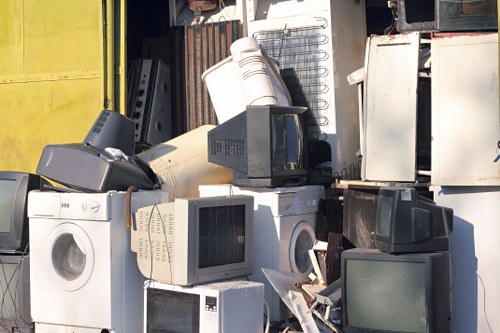
Not every business waste load is ordinary mixed rubbish. Some sites produce white goods, damaged appliances, mattresses, old fixtures or items that need extra care because of their size or material content. In those situations, the collection must be matched to the item type rather than treated as a standard bulk uplift. That protects the site from unnecessary handling issues and makes it easier to direct each load to the right route.
The best approach is to separate specialist items from general rubbish before collection day, then choose the service page that most closely matches the material. The fridge and appliance removal page is relevant where electrical items or household-style appliances are involved in a business setting, while the mattress and sofa disposal page is better for bulky soft furnishings. If the load contains materials that raise safety concerns, the hazardous waste disposal page should be considered before anything is moved.
Make a note of any special features such as stairs, narrow corridors, loading bay restrictions or items that cannot be moved with the rest of the load. Those details matter because they affect how a collection is planned and what equipment or labour is suitable. A careful description also helps keep the quotation relevant to the actual work rather than a vague estimate that does not reflect the site.
Waste from exterior areas, staff spaces and maintenance jobs
Commercial waste is not always generated inside the main work area. Outdoor storage points, small yards, staff shelters, maintenance cupboards and landscaping zones can all create rubbish that builds up separately from the core business waste stream. Keeping those areas included in the removal plan prevents waste from drifting between locations and helps maintain a cleaner overall site.
External waste often includes packaging from deliveries, old planters, broken storage items, garden cuttings or material left after minor upkeep work. Where the waste is green or landscape-related, the garden clearance page can be more appropriate than a general business collection. If the waste comes from a garage, storage shed or similar area, the garage clearance page may be the better fit because it reflects the sort of mixed items usually found there.
When the waste comes from a maintenance job, it may include a mix of loose debris and reusable materials that need sorting before removal. That is why one collection can sometimes include several item types, provided they are suitable for the same disposal route. The point is to keep the job coherent: one plan, one collection method and a clear understanding of what is being taken away.
How collections are usually planned and priced
Pricing is normally influenced by the amount of waste, the type of material, access to the loading point and whether the job involves simple loading or more involved handling. Mixed loads can be easier to quote when the contents are clearly described, while specialist waste may require a more specific assessment. The more precise the description, the more accurately the quote can reflect the actual collection.
It is also useful to think about the location of the waste within the premises. Items left near an exit are often simpler to remove than goods stored on upper floors, behind locked rooms or in areas with restricted access. If the collection includes several categories, list them in order of priority so the waste stream can be reviewed clearly. For general price guidance and quotation details, see pricing and quotes.
Two small steps help most enquiries: first, identify the main waste types; second, note anything that changes the collection method, such as bulky items, restricted access or separation requirements. Then ask for a quotation once the job is described clearly. If you prefer to arrange things online, the book online page may also be useful as a straightforward next step.
Recycling, disposal routes and responsible handling
A good commercial waste service does more than move items from one place to another. It also considers whether waste can be separated for recycling, which materials need to be kept distinct and how the load should be handled once it leaves the premises. This matters because many business waste streams contain a mix of cardboard, metal, wood, plastics and general rubbish that should not all be treated the same way.
The broader approach can be understood through the recycling and sustainability page, which is helpful when you want to see how waste may be directed after collection. Not every item can be recycled, and not every mixed load can be separated to the same degree, but a considered process still improves the chances of sensible handling. Where business waste contains confidential papers, mixed office contents or furniture with different materials, sorting becomes especially useful.
Responsible disposal also helps with planning future collections. Once the main waste types are recognised, it becomes easier to decide which items should be kept separate, which can be consolidated and which need specialist treatment. That reduces guesswork next time and makes the service more consistent for recurring collections or periodic clear-outs.
About Woolwich
Woolwich is a district in southeast London on the south bank of the River Thames, historically associated with riverside industry, military use and extensive transport links. Its identity has been shaped by the river, the presence of the Royal Arsenal and the long-standing role of Woolwich as a working town rather than a purely residential suburb. The area has a layered urban character, with streets and estates sitting alongside large civic and industrial-scale plots that have changed use over time. One of the best-known landmarks is the Royal Arsenal complex, whose surviving buildings and open spaces reflect the area’s former ordnance and manufacturing functions. The district also includes Woolwich Common, a substantial open space linked to the historic military landscape, and the Royal Artillery Barracks, which remains a prominent part of the local built environment. Woolwich town centre has undergone major change in recent decades, but it still retains a strong sense of movement and connection, helped by the riverside, rail services and the Woolwich Ferry. Cultural life is supported by a mix of heritage sites, markets, public spaces and regeneration projects that have reused older structures alongside new development. The result is a place where Georgian, Victorian, military and contemporary elements sit close together, giving Woolwich a visible sense of continuity even as the area continues to change.
Choosing the right service page for your waste
When a business in Woolwich needs waste removed, the right service page depends on what is actually being taken away. General mixed rubbish is not the same as office contents, bulky furniture, appliances or specialist waste, so it is worth matching the collection to the contents rather than using a broad label and hoping for the best. That approach makes the arrangement clearer and helps avoid unnecessary back-and-forth over what is included.
For premises with recurring waste, the most useful pages are usually the ones that reflect the day-to-day material first, then any one-off items that appear from time to time. If you need a broad starting point, the waste removal page offers a general overview, while the builders waste clearance page is better for heavier debris from works or refurbishments. If the waste comes from a flat or a domestic-style property used for business purposes, the flat clearance page may be the closer match, but only where the setting genuinely fits that description.
For a clean enquiry, keep the description plain and practical. Say what needs removing, where it is stored and whether anything needs special handling. Request a quotation when you have those details ready, and use the most relevant page if you want to narrow the service further before you do so.
Final steps for arranging a commercial collection
The simplest enquiries are usually the ones that describe the waste clearly from the start. A short summary of the main items, the access route and any awkward pieces is often enough to shape a sensible collection plan. If the site has a mix of waste streams, note which part is most urgent so the work can be framed around the right priority rather than a general tidy-up.
It can also help to decide whether the waste is recurring or a one-off clear-out. Recurring collections tend to benefit from a stable routine and a predictable type of waste, while one-off jobs may involve more varied contents and more preparation. Either way, the aim is to keep the process practical, well described and suited to the actual site conditions. You can review the relevant pages, then make your decision once the scope is clear.
For the final step, use the information that best matches your business waste and then request a quotation. If you are ready to move ahead, that is the most direct way to turn a clear waste description into a planned collection.