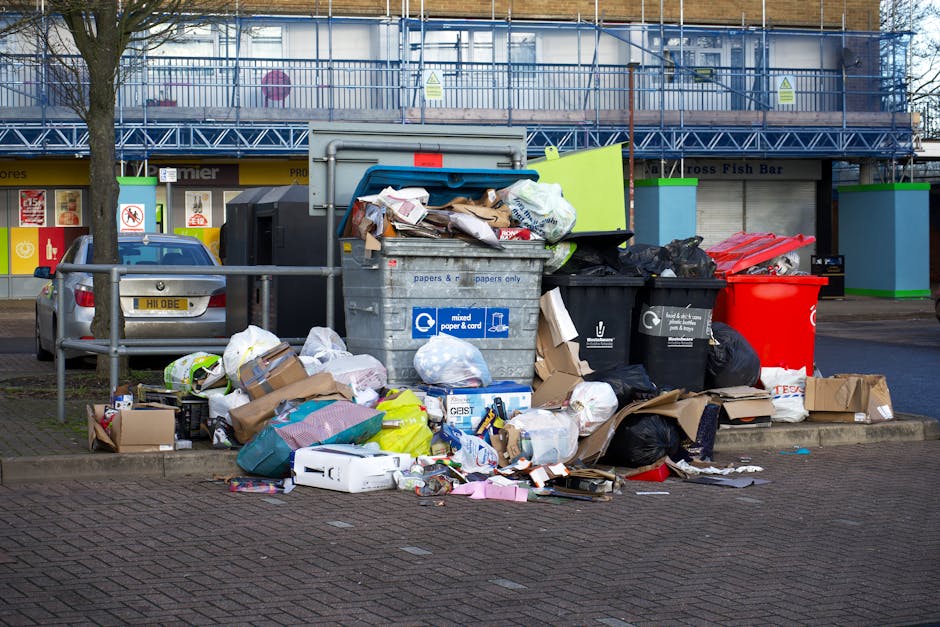
Avoid hidden rubbish removal charges in Woolwich: a practical guide for homeowners and businesses
If you have ever arranged a rubbish collection and then felt the bill creep up at the last minute, you will know how annoying it is. In Woolwich, where properties range from compact flats to busy commercial premises and family homes with awkward access, hidden fees can turn a simple clearance into an expensive headache. This guide on how to avoid hidden rubbish removal charges in Woolwich explains the pricing traps, the questions worth asking, and the signs of a fair, transparent service. The aim is simple: help you compare quotes properly, spot add-ons before they land, and book with confidence.
Truth be told, most surprise charges are preventable. A few careful checks before you book can save money, time, and a fair bit of stress. You do not need to become an expert in waste management overnight. You just need to know what to look for.
Why Avoid hidden rubbish removal charges in Woolwich Matters
Hidden charges matter because rubbish removal is rarely just about loading waste into a van. A quote may appear straightforward, but the final price can rise if the company applies extra fees for access issues, weight, waste type, waiting time, stairs, parking, or awkward items. In Woolwich, those small details can be common. Narrow streets, shared entrances, top-floor flats, basement storage, and tight parking all affect how long a job takes and how many workers are needed.
When pricing is unclear, you are left comparing apples with pears. One provider may look cheaper at first glance but quietly add separate charges for disposal, labour, fuel, or minimum-load rules. Another may be slightly higher upfront but far more predictable. Which one is really better? Usually the one that tells you the full cost before the job starts.
It also matters for trust. If a company is vague about costs, it is often vague about service too. That does not mean every low quote is dodgy, of course. But a transparent quote is a strong sign that the operator understands the job and respects the customer.
For households clearing a loft, offices replacing old furniture, or landlords dealing with move-out waste, surprise fees can also derail budgets. A collection booked for a Monday morning should not become a messy back-and-forth by lunchtime. You want certainty, not a game of hide and seek with the invoice.
How Avoid hidden rubbish removal charges in Woolwich Works
The easiest way to think about rubbish removal pricing is this: the quote should reflect the actual cost of collecting, carrying, sorting, and legally disposing of your waste. Reputable providers typically base the price on volume, item type, labour requirements, access, and any special handling needs. That is normal. The problem starts when important variables are not discussed early.
For example, a customer may describe a "small pile" of waste, but on arrival the team discovers broken furniture, heavy bags of rubble, and a fridge that needs careful handling. If the quote was only based on a quick glance, the price may rise. That is not always unfair, but it should be explained clearly in advance.
Good pricing should be built around a few straightforward principles:
- the quote is based on what you describe accurately
- any exclusions are stated before booking
- extra labour or specialist handling is explained, not slipped in later
- the customer knows whether VAT is included or added
- parking, access, or loading assumptions are made clear
Some companies offer fixed prices, others work with estimated prices that can change if the volume differs on site. Both can be legitimate. The key is whether the conditions are written in plain English. You should know exactly what is covered, and what would trigger a change.
If you are comparing services, it can help to look at the provider's pricing and quotes information alongside what they say about payment and security. That gives you a better sense of how the business handles money, not just waste.
Key Benefits and Practical Advantages
A clear price does more than protect your wallet. It makes the whole removal process smoother. You know what you are paying for, the crew knows what to expect, and the job can move ahead without awkward phone calls on arrival. A small thing, but it makes a huge difference.
Here are the biggest benefits of choosing transparent rubbish removal pricing:
- Budget control: you can plan around a real figure rather than an optimistic guess
- Fewer disputes: no surprises at the end of the collection
- Better comparisons: it becomes easier to judge one quote against another
- Faster decisions: you are less likely to hesitate if the quote is clear and fair
- Improved trust: transparency usually reflects professionalism
There is also a practical side that people often miss. Transparent pricing helps you prepare the site properly. If you know a charge may apply for carrying items down several flights of stairs, you can decide whether to move some waste closer to the entrance first. If a mattress or fridge needs special treatment, you can factor that into the plan rather than finding out while the van is already outside.
For business clients, this matters even more. Office moves, regular business waste removal, and end-of-lease clearances can involve several stakeholders. Finance teams want clean paperwork. Operations teams want the job done on time. Nobody enjoys surprise admin for a waste collection, let's face it.
Who This Is For and When It Makes Sense
This advice is useful for almost anyone booking waste clearance in Woolwich, but some people benefit more than others.
Homeowners often need help after a spring clean, renovation, bereavement, or long-overdue garage clear-out. If you are dealing with mixed waste, old furniture, or bulky items, it is easy for estimates to drift unless the scope is clear.
Landlords and letting agents need predictable pricing because void periods are tight. A move-out that leaves behind bags, furniture, or a full loft can become expensive quickly if access is tricky.
Businesses and office managers usually need tidy invoicing and minimal disruption. A vague quote can create internal headaches later, especially if the job involves desks, cabinets, confidential waste, or multiple rooms.
Builders and tradespeople should be especially careful. Construction debris is often heavier than it looks, and material type matters. If you are arranging clear-up after a project, you may want to review a service such as builders waste clearance so you understand what is and is not included.
People clearing bulky household items should also watch the fine print. Sofas, mattresses, appliances, and mixed furniture can carry different handling requirements. For those items, useful pages such as mattress and sofa disposal and fridge and appliance removal can help you understand likely cost drivers.
And if you are dealing with a full property clearance after a move or refurbishment, services like home clearance or house clearance may be more suitable than a one-off ad hoc collection.
Step-by-Step Guidance
Here is a simple process you can use before booking any rubbish removal job in Woolwich. Nothing fancy. Just a sensible routine that helps you avoid those awkward extra charges.
- List everything that needs to go. Walk through the space slowly. Include bulky items, bagged waste, broken fixtures, and anything that might be heavy or unusual.
- Separate normal waste from special items. Appliances, hazardous materials, confidential paper, and large furniture may need different handling. If you are not sure, ask before booking.
- Take a few photos. Good photos make a big difference. A quick phone picture in daylight can help the provider judge volume and access more accurately.
- Check access details. Note staircases, narrow halls, lift restrictions, gated entrances, parking limitations, and whether the crew will need to carry waste a long distance.
- Ask what the price includes. Does it cover labour, transport, disposal, VAT, and loading? If not, what extra charges might apply?
- Confirm the waste type. Mixed waste, hardcore, garden waste, electrical items, and furniture can all affect the price.
- Request the quote in writing. A written quote is easier to compare and easier to challenge if something changes unexpectedly.
- Read the terms carefully. Look for minimum charges, cancellation fees, waiting-time charges, and anything that changes if the waste is more than expected.
- Book only when you are comfortable with the detail. If the wording is vague, ask again. Better to feel slightly awkward now than annoyed later.
That last point matters more than people think. If a company cannot explain its own pricing clearly, you probably do not want to discover the reason on collection day.
Expert Tips for Better Results
In our experience, the biggest savings usually come from clarity, not haggling. You do not need to push hard on price if you reduce uncertainty. A few good habits can make a job much smoother.
Give an accurate description, even if it feels minor
Do not leave out the awkward chair, the broken wardrobe back panel, or the old paint tins in the corner. Small omissions are often what cause extra charges. If it is there, mention it.
Ask about access before the team arrives
A ground-floor flat with parking outside is very different from a third-floor walk-up with a tight staircase. The better the provider understands the job, the less likely the quote is to shift later.
Ask whether disposal fees are built in
Some companies quote labour only and add disposal later. Others bundle everything. Neither model is automatically wrong, but you must know which one you are getting.
Check whether special items need pre-approval
Hazardous or awkward items should never be assumed. For example, anything that needs separate handling may be better discussed first through hazardous waste disposal or a relevant specialist page.
Use the provider's information pages before you commit
Helpful pages such as what can go in a skip can be useful even if you are not booking a skip. Why? Because they help you understand what kinds of materials are usually treated differently. That knowledge makes the quote conversation better.
Watch for time-based add-ons
Some services charge more if the crew has to wait while access is sorted or items are still being moved. If your clear-out is likely to take time, tell them upfront. A two-minute mention now can save a fair bit later.
And a small human point: if your loft smells a bit musty and everything is under a layer of dust, say so. Teams can handle that. What they cannot handle is surprise after surprise.
Common Mistakes to Avoid
Most hidden charges happen because the customer and provider are not working from the same picture. The mistakes below are common, and honestly, very easy to make.
- Accepting a quote with no detail: "roughly this much" is not the same as a proper price
- Forgetting to mention stairs or parking problems: access issues often affect labour time
- Leaving out bulky items: one sofa can change the job more than a dozen bin bags
- Assuming all waste is treated the same: mixed waste, green waste, furniture, and electricals are not identical
- Not checking whether VAT is included: small print can change the final number quite a bit
- Booking too quickly after a vague phone call: speed is useful, but not if the quote is thin
- Not reading cancellation or minimum-charge terms: especially important for same-day bookings
One mistake people make all the time is describing the job by room count rather than waste volume. "It's just a garage" can mean a few shelves and a bike, or it can mean twenty years of accumulated clutter. Big difference. Huge difference, actually.
Tools, Resources and Recommendations
You do not need specialist software to avoid hidden rubbish removal charges, but a few simple tools help a lot.
- Your phone camera: take clear photos from several angles
- A rough item list: note each bulky item and any unusual materials
- Measuring tape: helpful for large furniture or awkward spaces
- Basic budget note: write down your maximum comfortable spend before you start calling around
- A saved copy of the quote: keep the email or message in case there is confusion later
It can also help to explore service information before you book. For example, if you are clearing a flat, the details on flat clearance may be more relevant than a generic rubbish collection page. If you are dealing with an office, office clearance can give you a better sense of what the service covers. And for family homes, house clearance or home clearance can help you compare the likely scope of work.
For businesses with regular disposal needs, business waste removal is worth a look because recurring work is where pricing clarity really pays off.
Law, Compliance, Standards and Best Practice
Waste collection is not just a pricing issue. There is also a legal and environmental duty to make sure waste is handled properly. In the UK, responsible waste removal services should transport and dispose of waste in line with current rules and accepted industry practice. You do not need to become a compliance expert, but you should expect professional behaviour.
Best practice usually means:
- the provider is transparent about what they can and cannot take
- items are handled safely and separated where needed
- appropriate care is taken with hazardous or specialist waste
- the company communicates clearly about disposal method and charges
- paperwork, where relevant, is handled properly
If you are disposing of confidential material, make sure the service is appropriate for that purpose. A page such as confidential shredding is useful when paper records, client files, or sensitive documents are involved. That is one of those areas where guessing is a bad idea. Better to separate it out and do it properly.
You should also pay attention to safety and insurance. If a team is carrying bulky furniture down stairs, through communal areas, or around vehicles, the service should have sensible procedures in place. The site's insurance and safety and health and safety policy pages are useful indicators that the company thinks carefully about the job, not just the sale.
For customers who value greener disposal, a company's approach to reuse and recycling matters too. A clear recycling and sustainability page usually signals that the business is taking sorting and diversion seriously, which is a good thing. It may not change the price directly, but it can change the quality of the service.
Options, Methods, or Comparison Table
There are a few ways to arrange waste removal, and each one has different pricing risks. The right choice depends on the amount of waste, how quickly it needs to go, and how much lifting you are willing to do yourself.
| Option | Best for | Risk of hidden charges | What to check first |
|---|---|---|---|
| Full rubbish removal service | Mixed waste, bulky items, access-heavy jobs | Medium if the scope is unclear | What is included, labour, VAT, access assumptions |
| Skip hire | Projects with waste generated over time | Medium to high if permits, size, or loading rules are not clear | What can go in a skip, permit needs, placement restrictions |
| Specialist item removal | Fridges, mattresses, sofas, appliances | Lower if item type is confirmed in advance | Item-specific handling, disposal method, access |
| Business clearance | Offices, shops, workspaces | Medium if volumes and timing are vague | Scope, confidentiality, out-of-hours needs, invoicing |
If you are unsure which route suits you, start with the waste type and the access conditions. Those two things answer a surprising amount. A tidy garden shed clear-out is one thing; a top-floor flat full of broken furniture is another entirely.
Case Study or Real-World Example
A small Woolwich landlord needed a property cleared after tenants moved out. The first instinct was to book the cheapest quote. The quote looked attractive, but it was based on a quick description over the phone and did not mention the narrow stairwell, the heavy sofa, or the old fridge in the kitchen.
Before booking, the landlord took photos, counted the larger items, and checked whether anything required special handling. The revised conversation was more precise, and the provider adjusted the estimate accordingly. That did two useful things: it removed the risk of shock charges, and it made the job easier to schedule because the team knew exactly what they were dealing with.
On the day, the crew arrived prepared, the collection went ahead without awkward add-ons, and the invoice matched the agreed scope. Nothing dramatic. Just a clean, efficient job. That is often how the best waste removals feel: a little boring in the best possible way.
The lesson is simple. The more accurate your description, the less room there is for hidden fees to appear. It sounds obvious, but in practice people are often rushing, stressed, or dealing with a messy room they would rather not think about again. Fair enough. Still worth slowing down for five minutes.
Practical Checklist
Use this quick checklist before you confirm a rubbish removal booking in Woolwich.
- Have I listed every item, including bulky or awkward ones?
- Have I mentioned stairs, lifts, parking, gates, or long carrying distances?
- Do I know whether the quote includes labour, disposal, VAT, and transport?
- Have I checked for any minimum charge or waiting-time charge?
- Have I confirmed whether special items need separate handling?
- Have I asked for the quote in writing?
- Do I understand the cancellation policy?
- Have I checked the company's safety and payment information?
- Do I know what happens if the waste volume is slightly different on arrival?
- Am I comfortable that the price is clear, not just cheap?
Expert summary: the safest way to avoid hidden rubbish removal charges is to describe the job accurately, ask what is included, and get the price in writing before collection day. That one habit prevents most disputes.
Conclusion
Avoiding hidden rubbish removal charges in Woolwich is less about finding the lowest number and more about finding the clearest one. Once you know how prices are built, it becomes much easier to compare quotes properly and avoid the usual traps. Be precise with your waste list, honest about access, and cautious with any quote that feels too vague to trust.
Whether you are clearing a house, emptying a flat, removing old office furniture, or dealing with a one-off bulky item, a little preparation goes a long way. And honestly, it saves a lot of hassle. A decent provider will welcome clear questions. If anything, it shows you are organised.
Get a free quote today and see how much you can save.
Take your time, ask the awkward questions, and choose the service that gives you certainty as well as convenience. That is usually the quieter path to a better result, and sometimes the quieter path is the smartest one.
Frequently Asked Questions
What counts as a hidden rubbish removal charge?
A hidden charge is any cost that was not clearly explained before booking. Common examples include extra labour, access fees, waiting charges, disposal surcharges, or VAT added later.
How can I tell if a rubbish removal quote is fair?
A fair quote should explain what is included, what could change the price, and whether the amount is fixed or estimated. If the quote feels vague, ask for more detail before agreeing.
Why do rubbish removal prices change on the day?
Prices can change if the actual job is larger, heavier, or harder to access than described. That is why photos and a clear item list matter so much.
Should I send photos before booking waste removal?
Yes, photos help the provider judge volume, item type, and access. They can reduce the chance of surprise charges and make the quote more accurate.
Do all companies include VAT in their quotes?
No, not always. Some quotes are inclusive, while others show VAT separately. It is worth checking so you can compare prices on the same basis.
Are sofas, mattresses, and fridges treated differently?
Often, yes. Bulky or specialist items may have different handling or disposal requirements. It is sensible to confirm this in advance rather than assuming they are priced the same as general waste.
What should I ask before booking rubbish removal in Woolwich?
Ask what is included, whether the price is fixed, what happens if the load is bigger than expected, and whether there are any charges for stairs, parking, or waiting.
Is the cheapest quote usually the best choice?
Not necessarily. The cheapest quote can be good value, but only if it clearly covers the job. A slightly higher quote with full transparency is often better than a bargain with surprise add-ons.
How do I avoid extra fees for access problems?
Tell the company about stairs, tight corridors, lifts, parking restrictions, and carrying distance before booking. That gives them a proper chance to price the job accurately.
Can I reduce rubbish removal costs by sorting waste first?
Often, yes. Separating bulky items, mixed waste, garden waste, and specialist items can make the job easier to quote and sometimes more efficient to complete.
What if I have confidential waste as well as general rubbish?
Keep it separate and ask about a suitable shredding or secure disposal option. Mixed waste can create both pricing and compliance issues if handled carelessly.
Where can I find more information about the company's policies?
It helps to review pages such as about us, terms and conditions, and complaints procedure. These can tell you a lot about how the business works and how it handles customer issues.